Insurance Verification & Pre-Visit Handouts for Faster Intake
Speed up patient intake by verifying insurance 48–72 hours before appointments, then close the prep gap with procedure-specific pre-visit preparation handouts.
Verification of insurance prior to patient checks eliminates the bottleneck and saves time. See how a pre-visit handout helps to complete the intake flow smoothly.
For a 9:15 appointment, a patient arrives at 9 a.m. The plan on file does not correspond with their insurance card. While the waiting room backs up, your front desk staff will be on hold with the payer for the next twelve minutes. The next patient is waiting, and the provider is already running late when the patient arrives in the exam room.
This scenario plays out in thousands of clinics every day. According to a 2023 MGMA survey, 65% of healthcare leaders report that a slow patient intake process contributes to revenue loss through administrative inefficiencies and claim denials. Faster check-in is the solution that most practices aim for. Early verification is the real solution.
Insurance verification and patient intake efficiency are directly connected. This article covers how verifying eligibility before the appointment changes your front desk workflow. It also covers what the research shows about denials and staff time and what the other half of the intake problem looks like when verification is already working.
Why Intake Gets Slow and Expensive
The majority of clinics consider patient intake to be a front desk issue. When a patient arrives, information is gathered by staff, and check-in takes place. The forms are overly lengthy, the patient completes them slowly, and the program is sluggish, all of which feel like speed issues. However, information shortages are the real barriers. The majority of the downstream costs and delays are caused by two in particular.
The eligibility gap. Staff is unaware of the patient's insurance status, copay, coverage for the service, and need for a referral. The primary reason intake takes so long is that those questions must be answered in real time during check-in.
The preparation gap. The patient did not have the correct insurance card when they came. Their referral authorization was forgotten. They did not observe the prescribed fast. The incorrect ID was brought by them. Staff now has to spend time resolving an issue that could have been avoided prior to the appointment.
Both gaps slow down your front desk. Both contribute to denied claims and rescheduled appointments. But they have different fixes.
According to industry data, clinics that verify insurance 48 to 72 hours before an appointment reduce average check-in time from 12 minutes to under 6 minutes. That's not a small efficiency gain for a practice running 25 appointments a day.
What Insurance Verification Actually Changes
Insurance verification before the appointment removes the eligibility gap from the check-in conversation entirely. By the time the patient walks in, your staff already know the answers. Check-in becomes a confirmation, not an investigation.
Here's what changes operationally when verification happens in advance:
- Staff know the copay before the patient arrives, so the financial conversation happens without surprises
- The patient's coverage for the specific service is confirmed before the provider spends time on it
- Referral requirements are caught in advance, not after the appointment ends
- Any plan changes, lapsed coverage, or secondary insurance questions are resolved before the patient is in the waiting room
Research from the revenue cycle sector shows that data entry errors at intake cause around 20% of all claim denials. Many of those errors come from staff trying to capture insurance information quickly at check-in, under pressure, while the waiting room fills. Moving that step earlier, with time to verify against payer systems without time pressure, reduces errors significantly.
Manual verification by phone or portal takes 15 to 20 minutes per patient. For a practice seeing 30 patients a day, that's up to 10 hours of staff time weekly spent on verification alone. Shifting that work to a dedicated time window before appointments frees your front desk to focus on the patients standing in front of them.

Figure: Running verification 48 to 72 hours before appointments moves the eligibility workload away from check-in and frees front desk staff during peak hours.
How to Run Verification Before the Appointment
The specific workflow varies by payer and by the software your practice uses. The general process is consistent.
Step 1: Pull the appointment list 48 to 72 hours out. Most practice management systems let you run a report of upcoming appointments by date. This is your verification queue.
Step 2: Confirm eligibility for each patient's scheduled service. Verify if the plan is active and if a referral or prior authorization is needed for the service. Verify the patient's current copay and deductible status. The majority of this is handled in batches rather than one patient at a time via payer portals and clearinghouses.
Step 3: Flag and resolve issues before the appointment. If a patient's insurance has lapsed, call them before the appointment to confirm payment arrangements. If a referral is required, contact the referring provider. If the wrong plan is on file, update it. All of these conversations are easier when you have 48 hours to resolve them rather than 4 minutes at the front desk.
Step 4: Attach confirmed eligibility notes to the patient's chart. When the patient arrives, front desk staff can confirm what's already been resolved rather than starting from scratch.
This process doesn't require new software. It requires dedicated staff time and a consistent schedule. Some practices assign one staff member to run verification for the following day's appointments as their last task each afternoon.
Even you can make all this system automatic, you need to hire someone to make this system once. This way you can save more time.
The Other Intake Bottleneck Verification Doesn't Fix
Insurance verification solves the eligibility gap. It doesn't solve the preparation gap.
A patient whose insurance has been verified can still arrive without their insurance card. They may have eaten breakfast before a fasting lab, not knowing to fast. They may have skipped required imaging from their previous provider. They may not know what the appointment involves at all.
That's not a billing problem. It's an education problem. And it adds time to your intake process just as reliably as an unverified policy does.
A 2023 industry report found that unprepared patients create front desk back-and-forths that add 5 to 10 minutes to check-in. Across a full week, that adds up to hours of staff time spent compensating for information that could have been given to the patient in advance.
The fix is a pre-visit preparation handout. One page. Sent or given to the patient before the appointment. It covers what to bring, what to do or avoid beforehand, and what to expect during the visit.
It doesn't replace the insurance verification workflow. It handles the part of the intake bottleneck that verification can't touch.
How Pre-Visit Handouts Complete the Intake Workflow
A pre-visit handout answers the questions patients would otherwise ask at the front desk. What should I bring? Do I need to fast? Should I stop my medication beforehand? What will happen during the visit?
When patients have those answers in writing before they arrive, check-in is faster, more complete, and less dependent on staff to fill in gaps.
The handout works best when it's specific to the appointment type. A pre-cardiac catheterization preparation guide is different from a pre-chiropractic adjustment guide or a pre-blood draw preparation sheet. Generic "what to bring to your appointment" sheets cover too little to be useful for any specific visit type.
On days with a high volume of procedures, a three-provider cardiology practice was consistently experiencing intake delays. The day before, the insurance had already been confirmed. Patients were arriving without necessary imaging, missing fasting instructions, or unsure whether to take their morning prescriptions, which was causing a delay at check-in. Pre-visit preparation sheets unique to each procedure were distributed by the clinic at the time of scheduling. Within three weeks, intake delays on procedure days decreased.
ClinicsFlows has 222 pre-visit preparation handouts across all 14 specialties. Each one is written for a specific procedure or appointment type, covering exactly what patients need to do, bring, and avoid before they arrive. Browse pre-visit templates for cardiology, orthopedics, dental, and more at clinicsflows.com/handouts. Every template is free, customizable with your clinic's name and contact details, and ready to hand out or send digitally before the appointment. See how to customize patient handouts
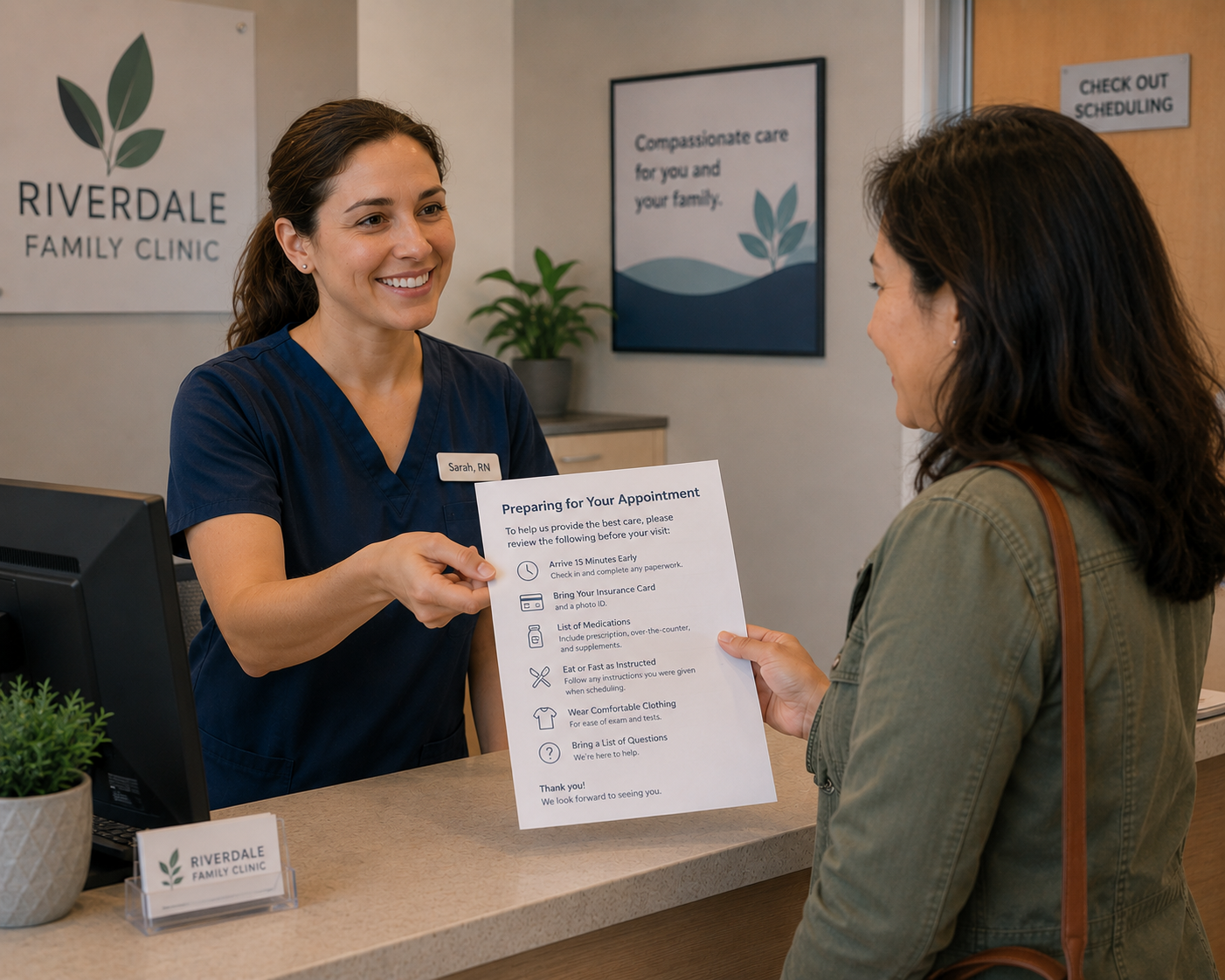
Figure: A procedure-specific pre-visit handout given at scheduling answers the questions patients would otherwise ask at check-in.
Frequently Asked Questions
How does insurance verification improve patient intake efficiency?
Verifying insurance 48 to 72 hours before an appointment removes eligibility questions from the check-in conversation. Staff already know the patient's coverage, copay, and referral requirements before they arrive. Check-in becomes a confirmation rather than an investigation. Industry data shows this can cut average check-in time from 12 minutes to under 6 minutes.
What percentage of claim denials come from intake errors?
Research from revenue cycle management organizations estimates that around 20% of claim denials stem from data entry errors made during patient intake. Most of these happen when staff are capturing insurance information quickly under check-in time pressure. Verifying eligibility in advance, with time to cross-check against payer systems, reduces these errors significantly.
How far in advance should clinics verify insurance?
The standard recommended window is 48 to 72 hours before the scheduled appointment. This gives staff enough time to resolve issues, such as lapsed coverage or missing referrals, before the patient arrives. Same-day verification leaves no time to act on what you find.
What should a patient intake process include besides insurance verification?
Eligibility verification, authorization and referral checks, patient demographic verification, and pre-visit patient preparation are all included in a comprehensive intake workflow. The final phase is frequently disregarded. Verification by itself cannot stop patients who arrive without the necessary paperwork or who have not followed preparatory instructions from causing delays at check-in. This gap is filled by procedure-specific pre-visit handouts.
What should a pre-visit patient handout include?
A pre-visit preparation handout should cover what to bring, any dietary or medication instructions to follow beforehand, and what to expect during the visit. Include your clinic's contact information in case the patient has questions. Keep it to one page. Write it for the specific procedure, not as a general guide.
Verification Gets Patients In. Preparation Gets Them Ready.
A fully verified patient who arrives unprepared still slows down your intake. An unprepared patient whose insurance clears instantly still holds up your front desk. Both bottlenecks need a fix.
Insurance verification before the appointment eliminates the eligibility guesswork at check-in. A procedure-specific pre-visit handout eliminates the preparation gap. Together, they cover both sides of the intake problem.
Browse hundreds of free pre-visit preparation handout templates at ClinicsFlows, covering all 14 specialties. Each template is specific to a procedure or appointment type, free to brand with your clinic's name, and ready to send to patients before they arrive.


