Free Patient Education Handout Templates: A Complete Guide for Clinics in 2026
Free patient education handout templates for 14+ specialty clinics—dental, dermatology, cardiology, physical therapy, and more. Customizable, brandable, and downloadable as a PDF. Browse free patient education materials at ClinicsFlows.
The purpose of this website is to make it easy for clinic/medical managers to browse the patient handout templates for different specialty clinics. You can edit, save, and customize the branding and can also download as PDFs or print them. Browse patient education handouts here.
If your front desk team is still struggling in designing handouts from scratch or digging through old folders for something printable, you're wasting time you don't have. Free patient education handout templates solve that problem immediately—no design skills required, no budget needed.
According to the American Academy of Family Physicians, patients forget 40–80% of medical information given verbally immediately after a clinic visit. A well-designed, easy-to-read handout closes that gap. The question is, where do you find templates that are actually clinic-ready?
This guide covers what to look for, which specialties need what, and how to get your handouts branded, formatted, and in patients' hands—fast.
Why Every Clinic Needs Standardized Patient Handouts
Verbal instructions alone don't hold up. Patients leave appointments overwhelmed, and by the time they get home, most of what you said is gone. A printed or emailed handout gives them something to refer back to — and it protects your clinic. You can also send the soft copy to their WhatsApp or email them.
Standardized handouts directly affect:
- Compliance — Patients who have written instructions follow them more consistently. That means fewer missed medications, fewer missed follow-up appointments, and better outcomes.
- Liability — A documented handout is evidence that your clinic provided clear discharge instructions. That matters if a patient claims they weren't told what to do post-procedure.
- Staff time — Without ready-made templates, your front desk staff improvises. Some print out random PDFs from the internet. Others painstakingly type up the same instructions every week. Both waste time.
- Consistency — If three providers in your clinic give different post-op instructions for the same procedure, that's a clinical risk. Standardized templates eliminate variation.
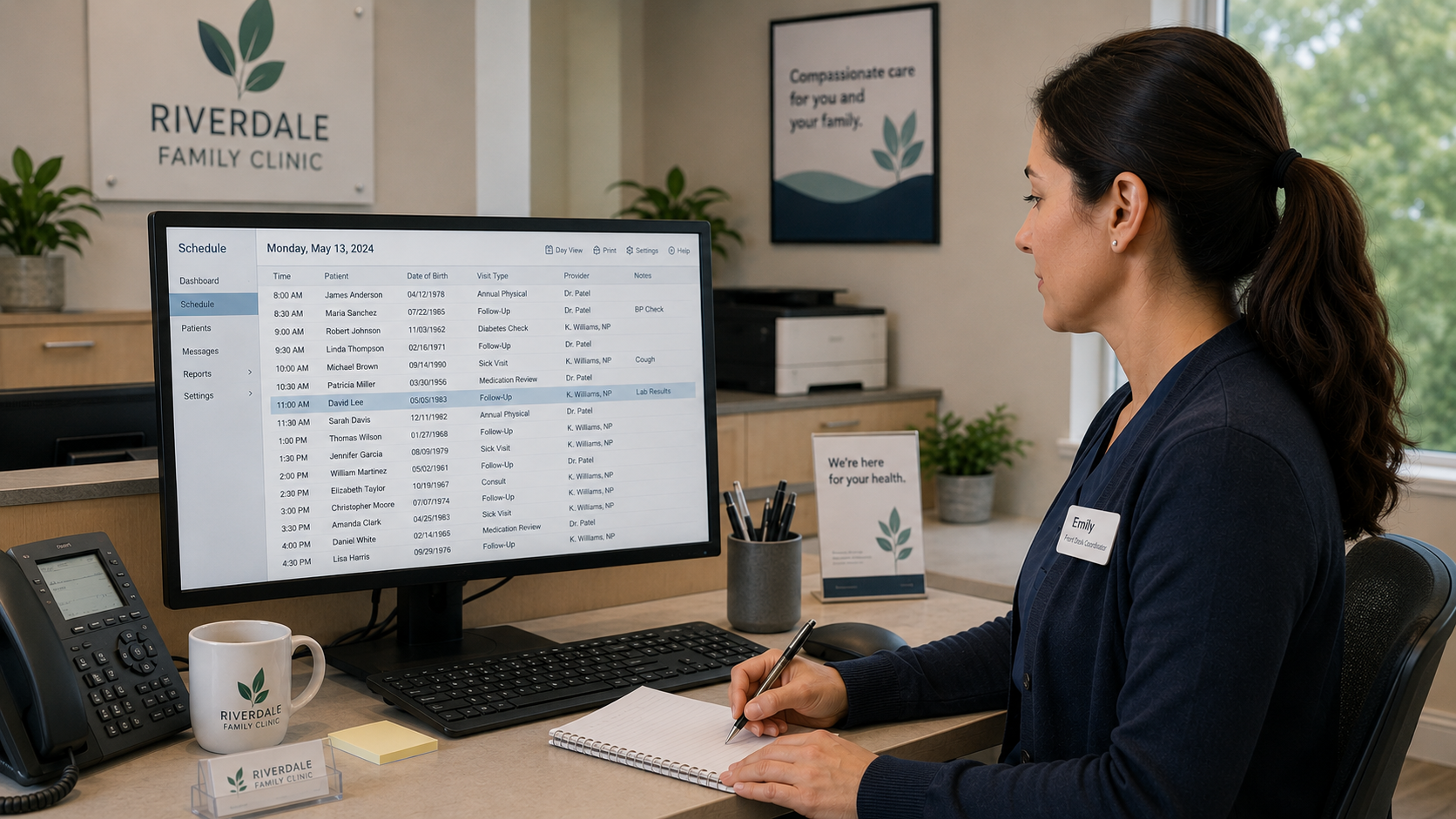
A front desk coordinator at a dermatology clinic who used to spend 15 minutes per patient reprinting and explaining aftercare instructions now hands out a single branded PDF — reducing follow-up calls by half. That's the practical difference standardized handouts make at checkout.
You can save those templates in one place by creating your account, and then your staff members can access the same standard handout templates. You can also use AI to create new handouts.

What to Look for in a Free Patient Handout Template
Not all free templates are worth using. A badly written or poorly formatted handout can confuse patients or reflect poorly on your clinic. Here's what separates a usable template from one that creates more problems.
Plain language and reading level Most clinic patients have mixed literacy levels. Handouts should target a 6th–8th grade reading level for general instructions. For patients who want more detail — such as those managing chronic conditions — a higher reading level (up to 10th grade) can be appropriate. Avoid medical jargon unless you define it. You can define the reading level while creating new handout templates.
Printability Templates need to render cleanly on standard letter or A4 paper. Multi-column layouts often break. Look for single-column formats with clear headings and adequate white space.
Customizability An unbranded handout looks like it came from a Google search. Your patients should see your clinic's name, logo, and contact information on every handout you hand them. Templates that allow branding customization—logo upload, clinic name, phone number, and address—are significantly more professional.
Specialty accuracy Generic templates are a liability in specialty clinics. A cardiology patient's diet instructions must not echo what you'd give a general practice patient. A pediatric handout needs age-specific dosing guidance. Locate templates built for your specialty.
Digital and print-ready Some patients prefer an emailed PDF they can open on their phone. Others need a printed copy at checkout. A useful template works for both. Look for platforms that support both PDF download and direct printing.
The good news is we are providing all these features like clinic specialties, editing, custom branding, PDF downloads, and printability for free.
The Most Important Patient Handout Types by Specialty
The handout types your clinic needs depend on the procedures you perform and the conditions you treat. We have many categories that you can use to create handouts depending upon the procedure and condition. Here's a practical breakdown by specialty:
Dental
- Post-extraction care instructions
- Periodontal procedure aftercare
- Oral hygiene education for new patients
Dermatology
- Post-procedure skin care (laser, biopsy, chemical peel)
- Eczema and psoriasis management
- Sun protection and skin cancer prevention
Orthopedics
- Post-surgical rehabilitation overview
- Joint replacement recovery milestones
- Physical activity restrictions after fracture or sprain
Cardiology
- Heart-healthy diet (specific to cardiovascular patients — not generic)
- Medication adherence for hypertension or arrhythmia
- Post-catheterization discharge instructions
Pediatrics
- Fever management and when to call the clinic
- Childhood vaccination schedule
- Age-appropriate nutrition guidance
Physical Therapy
- Home exercise program instructions
- Post-session care and icing protocols
- Return-to-activity guidelines
Psychiatry / Mental Health
- Medication side effects and what to monitor
- Coping strategies for anxiety and depression
- Crisis resources and escalation contacts
ENT
- Post-tonsillectomy or sinus surgery care
- Hearing aid usage and maintenance
- Allergy management and trigger avoidance
Optometry
- Post-dilation care instructions
- Contact lens hygiene and care
- Signs of eye infection or complication
Urgent Care
- Wound care and dressing change instructions
- When to return or go to the ER
- Antibiotic instructions and completing full courses
Chiropractic
- What to expect after an adjustment
- At-home stretching routines
- Posture correction exercises
ClinicsFlows covers 14 specialties with pre-built, specialty-specific handout templates—each written for clinical accuracy, not generic wellness advice.
How to Customize Your Free Patient Education Handout Templates
Getting a template branded and ready to hand to patients takes a few minutes, not an afternoon. Here's the exact process on ClinicsFlows:
Step 1: Find your template Browse the public library at clinicsflows.com/handouts. Filter by specialty and category — post-care, chronic disease management, medication guide, pediatric care, and more. No account needed to browse.
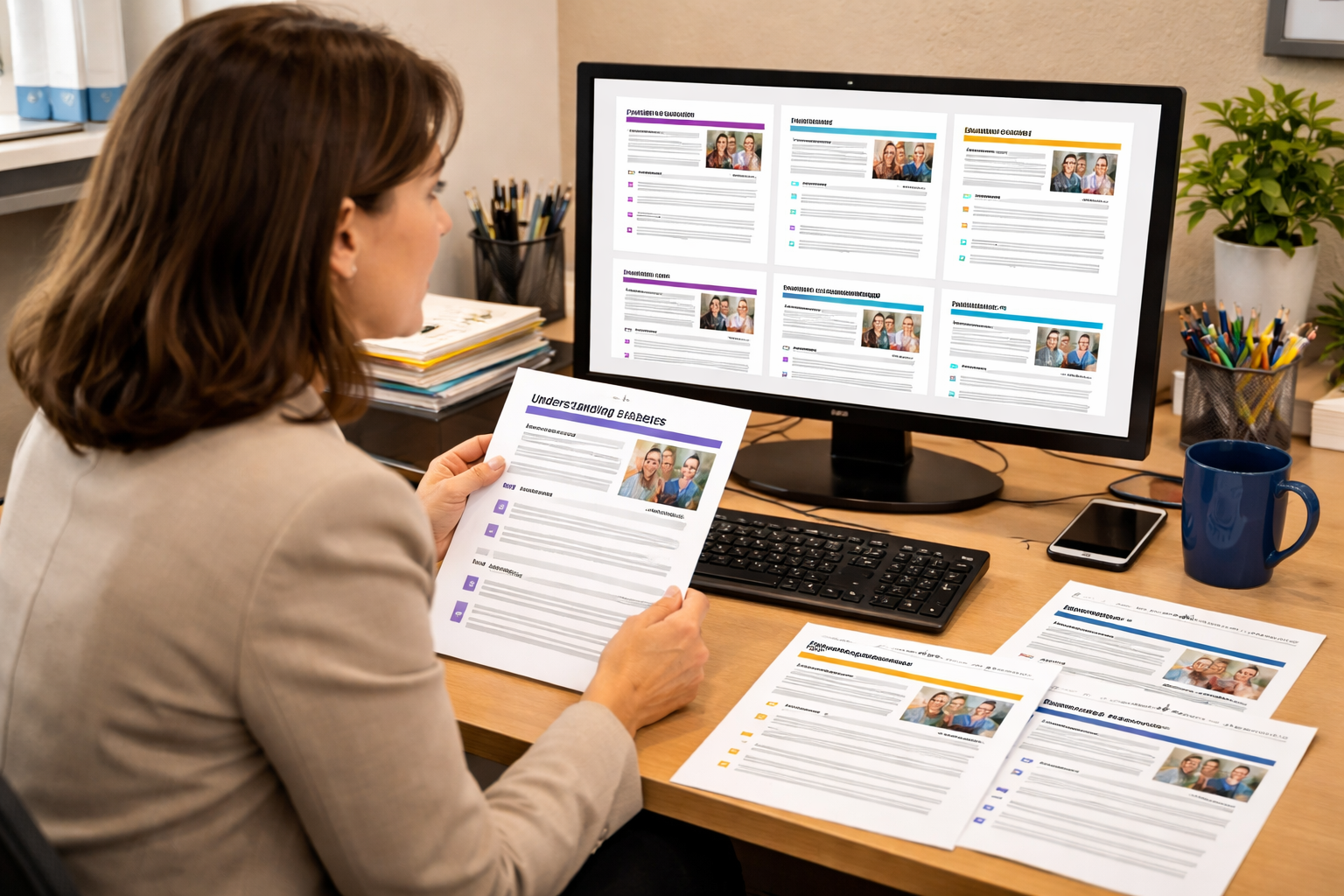
Step 2: Open the handout Click on any handout to open the preview. You'll see the full content, formatted and ready to use.
Step 3: Add your clinic's branding Before downloading, open the branding editor. Upload your clinic logo and enter your clinic name, phone number, email, and address. The header updates in real time so you can see exactly what will print.
Step 4: Save as PDF or print Click Download to save a branded PDF, or click Print to send it directly to your printer. Both options are free — no account required for basic use.
Step 5 (with a free account): Edit content and create with AI If you register for a free account, you unlock the ability to edit the full handout content — not just the branding. You can also create entirely new handouts using the built-in AI generator. Describe the topic, select a specialty, and choose a reading level (6th, 8th, or 10th grade), and the platform generates a structured, clinic-ready handout in seconds. Saved handouts stay in your library for reuse across your team.
This is the workflow that replaces a 15-minute front-desk improvisation with a 90-second branded PDF—every single time.
Common Mistakes Clinics Make With Patient Handouts
Even well-intentioned clinics distribute handouts that undermine trust or confuse patients. These are the most common problems:
Using outdated information A handout that references old drug dosages or discontinued procedures is a liability. Every template should have a review date, and your team should update them at least once per year — more often for fast-changing clinical areas.
Too much medical jargon Writing "administer the antipyretic as directed" when you mean "take the fever reducer as prescribed" creates a barrier. Patients who can't understand their instructions don't follow them. Target plain language. Where a medical term is necessary, define it immediately.
No clinic branding An unbranded handout looks like it was printed from a random website. It misses the opportunity to reinforce your clinic name, contact number, and professionalism. Patients who call back need to know exactly where to reach you — that number should be on every handout.
Wrong reading level for the audience A 10th-grade handout handed to a patient with limited English proficiency won't be read. Know your patient population. If you serve a mixed demographic, keep your default templates at 6th–8th grade and offer more detailed versions to patients who want them.
Not having both digital and print versions Some patients will lose a printed page by the time they reach the car. Others don't use smartphones. Your clinic workflow should support both—email a PDF at checkout when possible and always have a printed backup.
Frequently Asked Questions
What should be included in a patient handout?
A good patient handout covers what the condition or procedure is, what the patient should do, what they should not do, what normal recovery looks like versus warning signs that require a call or return visit, and your clinic's contact information. For medication handouts, include dosing, timing, and side effects to watch for.
Are free patient education handout templates customizable for my clinic?
Yes—on ClinicsFlows, every template can be customized with your clinic's logo, name, phone number, email, and address before you download or print it. If you create a free account, you can also edit the full handout content or generate new ones using AI, then save them to your clinic's library for your whole team.
What file format should clinic patient handouts be in?
PDF is the standard for clinic handouts. It preserves formatting across all devices and printers, and patients can open it on any smartphone, tablet, or computer. For printed copies, A4 or US Letter formats at standard margins work best. Avoid Word documents — formatting breaks too easily when staff open them on different machines.
How often should patient handout templates be updated?
At minimum, review all handouts annually. For high-risk clinical areas—medications, post-surgical care, and chronic disease management—review every six months. Any time clinical guidelines change (new drug approvals, revised screening recommendations, or updated dosing protocols), update the relevant templates immediately. Mark all handouts with a clear "Last Updated" date in the footer.
The Bottom Line
Your clinic shouldn't be spending time designing documents that already exist. Free patient education handout templates — the right ones, properly branded, written at the right reading level for your patients — are ready to use right now.
ClinicsFlows offers 100+ free, specialty-specific handout templates across 14 medical specialties. Browse, brand, and download without creating an account. Register free to edit content, save templates to your library, and generate new handouts by AI in seconds.
Start with your specialty at clinicsflows.com/handouts